From Burnout to Balance: Honoring the Acharya Within


In our tradition, the teacher is the architect of the nation’s soul. Yet, in the corridors of modern Indian schools, this sacred role often feels like an exhausting marathon. Between the high student-to-teacher ratios, the weight of board results, and the relentless hum of administrative duties, many educators find their "internal lamp" flickering.
The fatigue we feel at 2:00 PM isn't just physical; it is a depletion of our Prana (life force). When we are burnt out, we cannot lead with clarity. To reclaim our role, we must move beyond merely "completing the syllabus" and return to the practice of "commanding the energy" of the classroom.
Acharya Devo Bhava: Teaching as a Living Yoga
The slogan "Acharya Devo Bhava" reminds us that the teacher is a manifestation of the divine. This is not just a title of respect—it is a call to conduct (Achar). According to Yoga philosophy, an Acharya is one who teaches through their very state of being.
The Yoga Sutras emphasize Chitta Prasadanm—the cultivation of a serene, joyful, and clear mind. When you stand before your students, you are a mirror. If your mind is clouded by the stresses of management or personal fatigue, your students will reflect that restlessness. By practicing Yoga, you honor the divinity within yourself, ensuring that the light you bring to the classroom is steady, bright, and inspiring.
The Teacher’s Toolkit: Cultivating Calm, Vitality, and Balance
To embody the Acharya throughout the day, we must integrate "Micro-Yoga" practices that ground our nervous system and sharpen our intellect (Buddhi):
For Intellectual Clarity (The Management Crunch):
Technique: Sama Vritti (Box Breathing). Before an appraisal or a high-stakes meeting, inhale, hold, exhale, and hold for 4 counts each. This practice centers the mind, allowing you to speak with the authority of a balanced leader.
For Grounded Patience (Navigating Student Energy):
Technique: Prithvi Mudra (Earth Gesture). Touch the tip of your ring finger to your thumb. This subtle gesture grounds your energy when the classroom volume rises, allowing you to remain the "still point" in the center of the storm.
For Harmonious Relations (Colleague Dynamics):
Technique: Metta (Loving-Kindness) Micro-Meditation. Spend ten seconds silently wishing peace upon a colleague before a difficult conversation. This dissolves the ego and maintains the sanctity of the workspace.
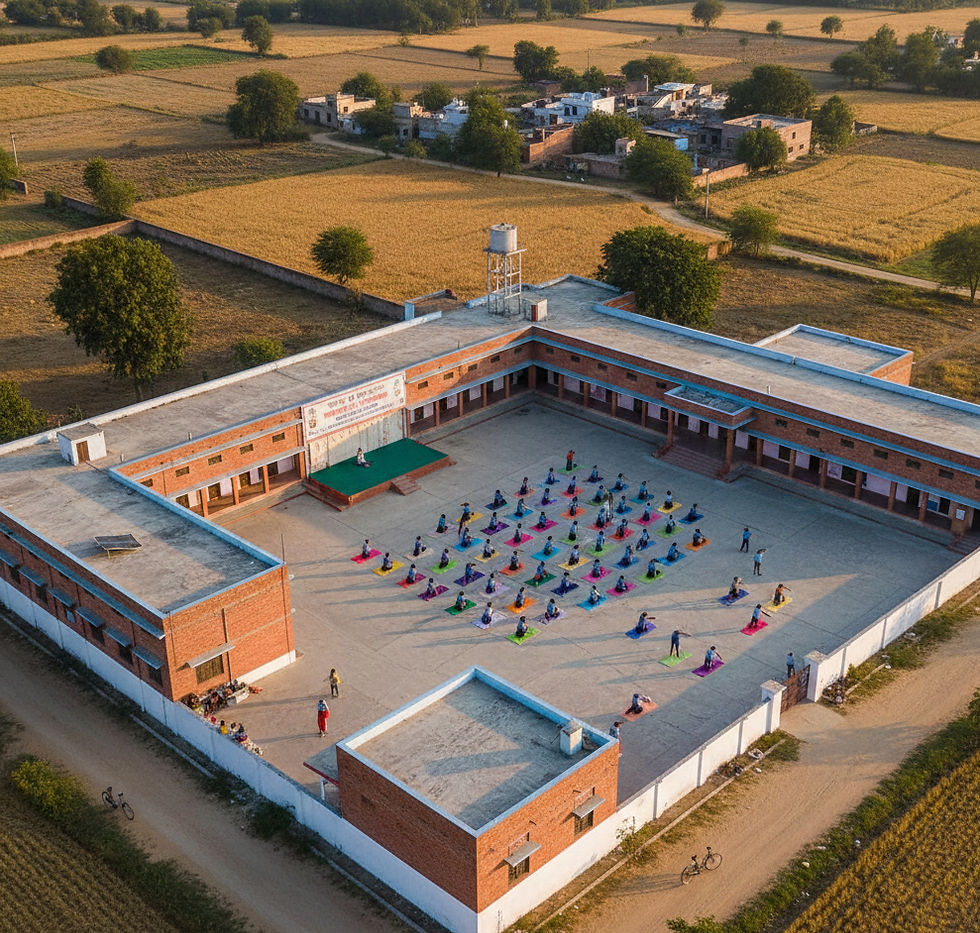
For Physical Vitality: "The Focus Lift": Do not teach through your fatigue; transform it. Make it a sacred ritual to start every class with a collective stretch alongside your students.
The Practice: Stand at the front. Invite the class to rise into Tadasana (Mountain Pose). Together, inhale deeply into Urdhva Hastasana (Upward Salute), reaching toward the sky and interlacing fingers to lengthen the spine.
The Benefit: As you decompress your spine and oxygenate your brain, you signal to your students that learning is a high-energy, conscious act. By moving in unison, you establish a "silent authority"—a shared pulse of focus that prepares the soil for the seeds of knowledge.
The Institutional Foundation: Supporting the Light
For a teacher to remain a beacon, the institution must provide the oil for the lamp. Schools must recognize that teacher wellness is not a luxury, but a foundational necessity:
Sanctified Silence: Designating areas in staff rooms for quiet reflection rather than just administrative hustle.
Rhythm Over Rush: Creating schedules that allow for a 5-minute "transition breath" between classes.
Human-Centric PD: Shifting Professional Development to focus on the "Inner Acharya" rather than just digital tools. (Note: We will explore how institutions can architect this culture of wellness in our upcoming feature.)
Conclusion: Lead with Your Light
Your students may eventually forget the specific theorems or dates you taught, but they will never forget the presence you brought into their lives. When you choose balance over burnout, you are not just preserving your health; you are becoming a living example of resilience for the next generation.
"The final bell should not find you exhausted, but fulfilled—having served as a true vessel of knowledge".
Will you take the first step tomorrow? Introduce "The Focus Lift" to your students. Observe how the atmosphere of your classroom shifts from chaos to calm. Share your experience in the comments below—let us build a community of balanced educators.
Comments